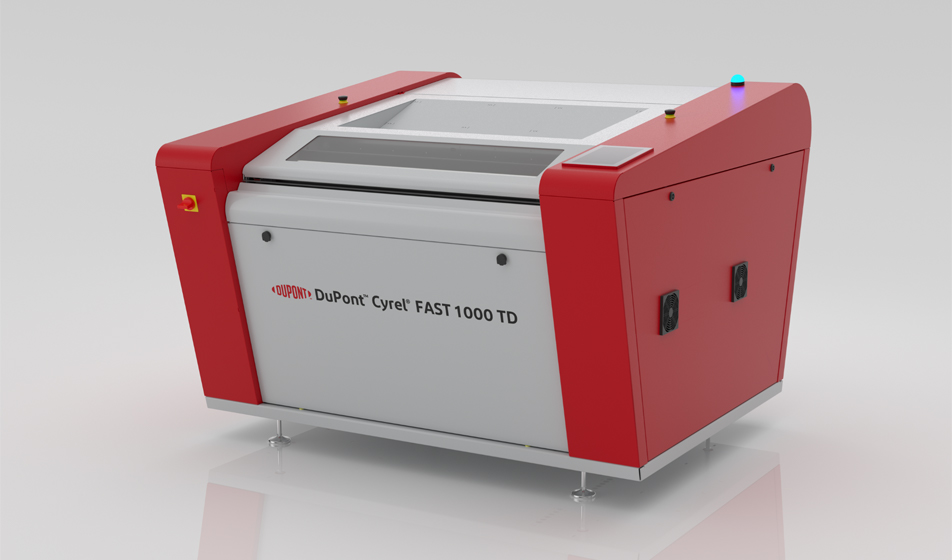

DuPont™ Cyrel® Flexographic Solutions announced that its Cyrel® FAST thermal platemaking workflow has achieved Certified Energy Savings recognition from GreenCircle, further validating the system’s measurable environmental benefits and reinforcing the role of DuPont™ Cyrel® as a leader in high‑performance, lower‑impact flexographic printing technologies.
GreenCircle Certified, the internationally recognized third-party certification entity that independently verifies the validity of sustainability claims, confirmed that the Cyrel® FAST workflow delivers verified reductions in energy consumption compared to traditional solvent-based platemaking systems. The certification provides converters and brand owners with credible assurance of the system’s ability to lower operational energy use while maintaining high-performance output.
“Cyrel® FAST has redefined what sustainable responsible platemaking looks like through its completely solvent‑free process. Not only does the system simplify operations, but by eliminating the need to handle, distill, and dispose of washout solvents, it also significantly reduces environmental burden while providing a cleaner, safer working environment,” said Tucker Norton, Vice President & General Manager of Printing & Films.
Energy savings are calculated by comparing the power consumption of a Cyrel® FAST Thermal Platemaking workflow, and the power consumption of a Solvent Platemaking Workflow, based on 96-hour testing cycle. According to the analysis, the Cyrel® FAST workflow meets all the necessary qualifications to be certified with 20% less energy consumption than traditional solvent-based processes.
DuPont’s published life cycle assessments show that Cyrel® enhanced flexographic printing delivers environmental benefits over gravure, further reducing the carbon footprint of packaging. The same report also includes a comparison between Cyrel® FAST and traditional solvent processing. The thermal system simultaneously delivers exceptional efficiency gains, including up to 75% faster platemaking, streamlined workflow steps, and consistent high‑quality plate output, all achieved while dramatically reducing the process’s environmental footprint. Notably, Cyrel® FAST reduces volatile organic compound (VOC) emissions by up to 99.8% compared to conventional solvent workflows and lowers global warming potential by 48%, offering a proven pathway for converters seeking to reduce their Scope 2 greenhouse gas emissions.
“This certification reinforces our commitment to delivering more sustainable solutions, providing customers with greater confidence that Cyrel® FAST helps reduce environmental impact without compromising performance, quality, or reliability. As global demand for sustainable print solutions grows, Cyrel® plate technologies continue to play a critical role in enabling our customers to meet both their operational and sustainability goals,” said Tucker.
For more on the DuPont™ Cyrel® FAST thermal processing system, visit www.dupont.com. To view the certificate, click here:
“We have received and are publishing the entire text. The editorial staff specifies that they have not made any changes to the submitted text, declining any responsibility for the truthfulness, accuracy, and completeness of the information contained therein, which remains the exclusive property and responsibility of the senders.”
PakarPBN
A Private Blog Network (PBN) is a collection of websites that are controlled by a single individual or organization and used primarily to build backlinks to a “money site” in order to influence its ranking in search engines such as Google. The core idea behind a PBN is based on the importance of backlinks in Google’s ranking algorithm. Since Google views backlinks as signals of authority and trust, some website owners attempt to artificially create these signals through a controlled network of sites.
In a typical PBN setup, the owner acquires expired or aged domains that already have existing authority, backlinks, and history. These domains are rebuilt with new content and hosted separately, often using different IP addresses, hosting providers, themes, and ownership details to make them appear unrelated. Within the content published on these sites, links are strategically placed that point to the main website the owner wants to rank higher. By doing this, the owner attempts to pass link equity (also known as “link juice”) from the PBN sites to the target website.
The purpose of a PBN is to give the impression that the target website is naturally earning links from multiple independent sources. If done effectively, this can temporarily improve keyword rankings, increase organic visibility, and drive more traffic from search results.