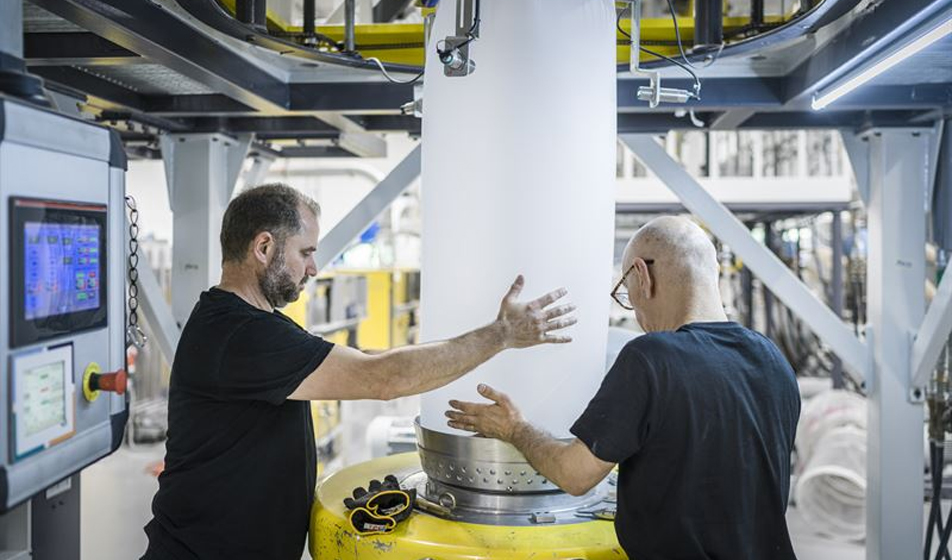

GAIA BioMaterials (GAIA), a global leader within biodegradable and compostable bioplastic compounds, has received final confirmation on the approval of its European patent for PLA-free film extrusion materials.
The patent, originally filed back in 2020, covers a new and innovative line of compounds that don’t rely on PLA for its properties. Instead, it substitutes the PLA with a unique blend of biodegradable and compostable polymers and minerals. Compounds based on the patent are already in use for applications such as carrier bags, fruit & vegetables bags, waste bags, and medical aprons, with several more under development or consideration.
“We are very pleased with the final confirmation for this patent,” says Peter Stenström, CEO at GAIA, “I know the effort that has gone into it; it reflects the people in our R&D department, and the work they are capable of.
“Our customers have responded really well to the new materials developed under the patent,” says Niklas Rosenkvist, Sales Director at GAIA, “it shows that we as an organization not only are capable of identifying the needs in the market, but also deliver on them.”
“Having the patent finally confirmed in Europe, we know that our new R&D platform and patent strategy is working. We can now continue our efforts into developing the next generation of leading biodegradable and compostable bioplastics,” concludes Konrad Rosén, R&D Director at GAIA.
“Riceviamo e pubblichiamo integralmente. La redazione specifica di non aver apportato modifiche al testo inviato, declinando ogni responsabilità riguardo alla veridicità, accuratezza e completezza delle informazioni ivi contenute, che restano di esclusiva proprietà e responsabilità dell’azienda mittente.”
PakarPBN
A Private Blog Network (PBN) is a collection of websites that are controlled by a single individual or organization and used primarily to build backlinks to a “money site” in order to influence its ranking in search engines such as Google. The core idea behind a PBN is based on the importance of backlinks in Google’s ranking algorithm. Since Google views backlinks as signals of authority and trust, some website owners attempt to artificially create these signals through a controlled network of sites.
In a typical PBN setup, the owner acquires expired or aged domains that already have existing authority, backlinks, and history. These domains are rebuilt with new content and hosted separately, often using different IP addresses, hosting providers, themes, and ownership details to make them appear unrelated. Within the content published on these sites, links are strategically placed that point to the main website the owner wants to rank higher. By doing this, the owner attempts to pass link equity (also known as “link juice”) from the PBN sites to the target website.
The purpose of a PBN is to give the impression that the target website is naturally earning links from multiple independent sources. If done effectively, this can temporarily improve keyword rankings, increase organic visibility, and drive more traffic from search results.